 John
John
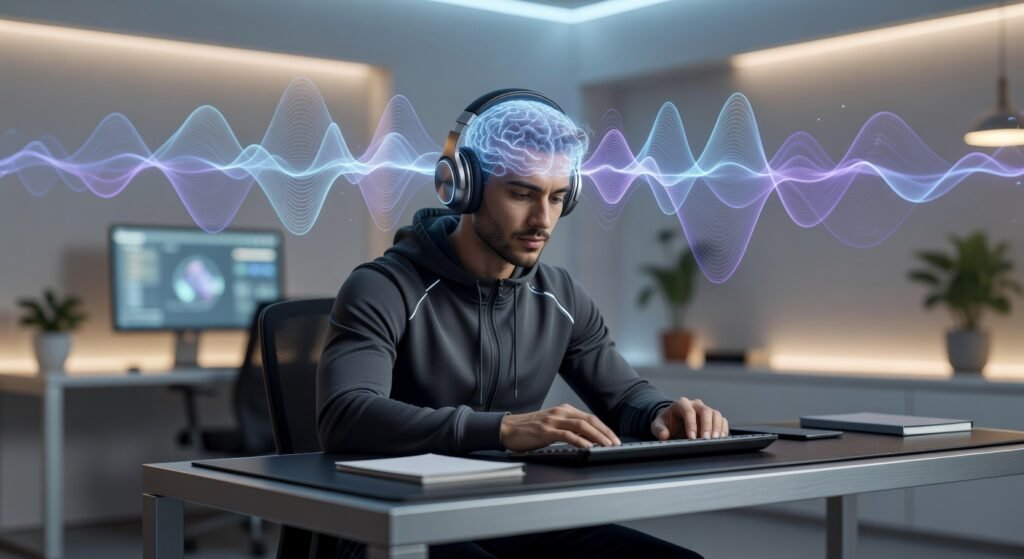
If you’ve ever sat down to study or work on something important — only to find your mind wandering, your focus fragmented, and your memory frustratingly unreliable — you’re not alone. Cognitive performance is one of the most sought-after advantages in today’s high-pressure academic and business world.
But what if the solution wasn’t another cup of coffee, a productivity app, or an expensive nootropic stack? What if it was sound itself ?
Binaural beats for memory and focus have quietly moved from niche neuroscience labs into the daily routines of high-performing students, CEOs, and creators worldwide. The science is real. The results are measurable. And the application is surprisingly simple.
This article breaks down exactly what binaural beats are, how they work on your brain, what the research says, and — if you’re ready to take this seriously — how a purpose-built audio program can help you access peak cognitive states on demand.
What Are Binaural Beats? (And Why Should You Care?)
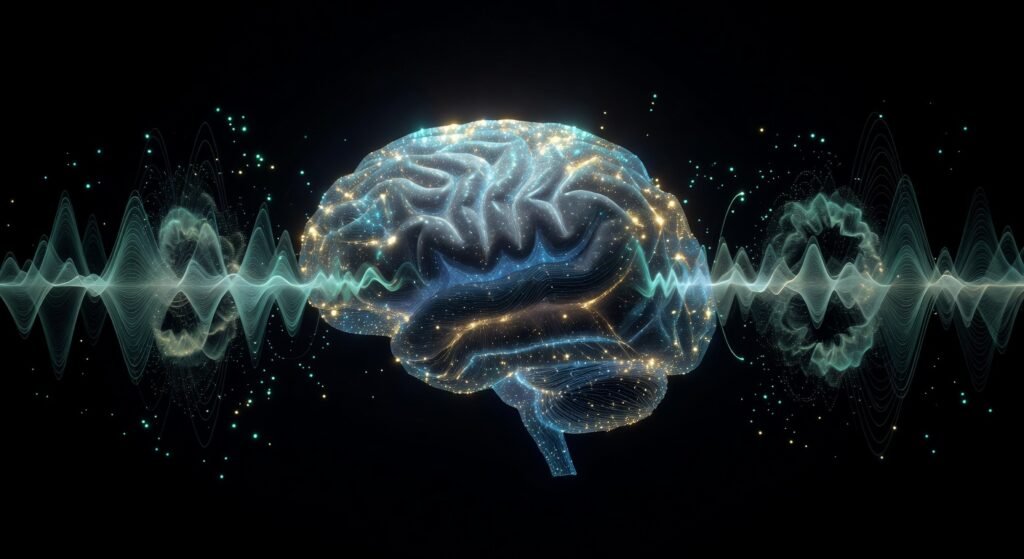
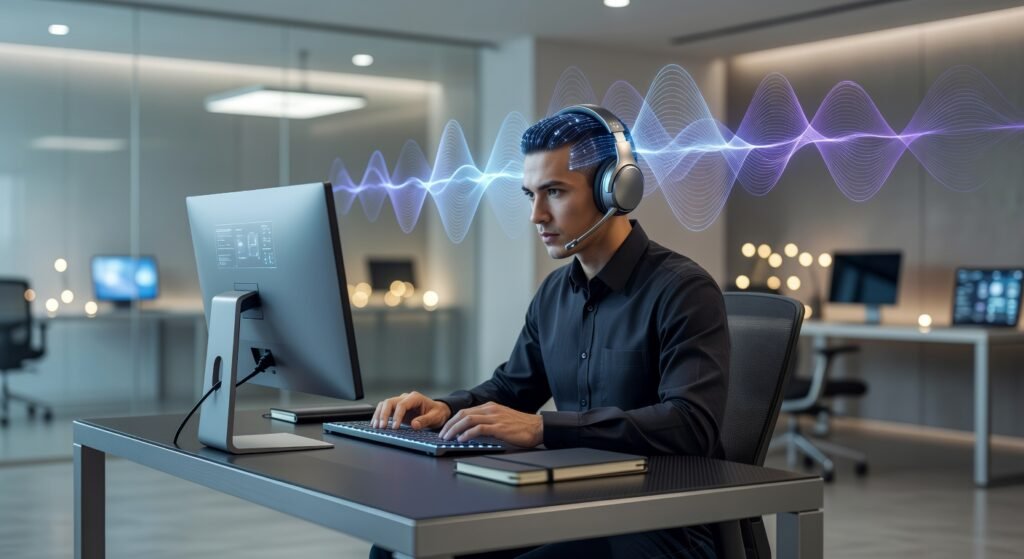
Binaural beats are an auditory illusion created when two slightly different sound frequencies are played simultaneously — one in each ear through headphones. Your brain, attempting to reconcile the two tones, perceives a third “beat” that corresponds to the mathematical difference between the two frequencies.
For example:
- Left ear hears 200 Hz
- Right ear hears 210 Hz
- Your brain perceives a 10 Hz beat — which falls in the Alpha brainwave range
This process is called frequency-following response (FFR), and it’s the mechanism by which binaural beats gently guide your brainwaves into specific states associated with focus, learning, relaxation, or creativity.
This isn’t pseudoscience. It’s neuroscience.
The Science of Brainwaves and Cognitive Performance
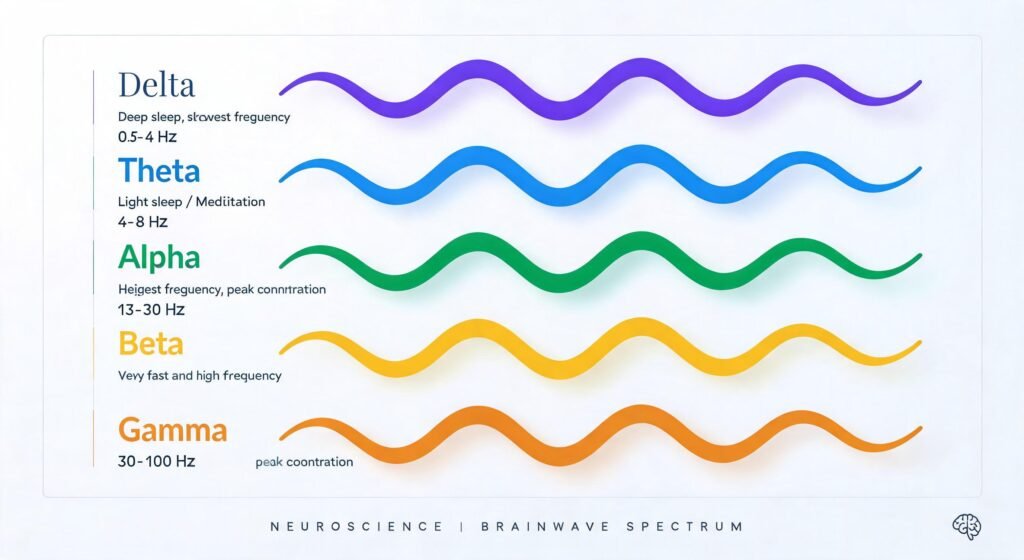
To understand how binaural beats work for memory and focus, you need to understand your brain’s electrical patterns — also called brainwave states:
| Brainwave | Frequency Range | Associated Mental State |
|---|---|---|
| Delta | 0.5–4 Hz | Deep sleep, regeneration |
| Theta | 4–8 Hz | Deep relaxation, creativity, memory consolidation |
| Alpha | 8–13 Hz | Calm focus, learning readiness |
| Beta | 13–30 Hz | Active thinking, alertness, problem-solving |
| Gamma | 30–100 Hz | Peak cognitive processing, information binding |
For students and entrepreneurs, the sweet spots are typically:
- Alpha (8–13 Hz): Ideal for absorbing new information without stress or mental fatigue
- Beta (13–30 Hz): Best for analytical tasks, writing, decision-making, and deadlines
- Gamma (30–100 Hz): Associated with high-level cognitive binding — connecting complex ideas rapidly
- Theta (4–8 Hz): Powerful for memory consolidation and creative breakthroughs
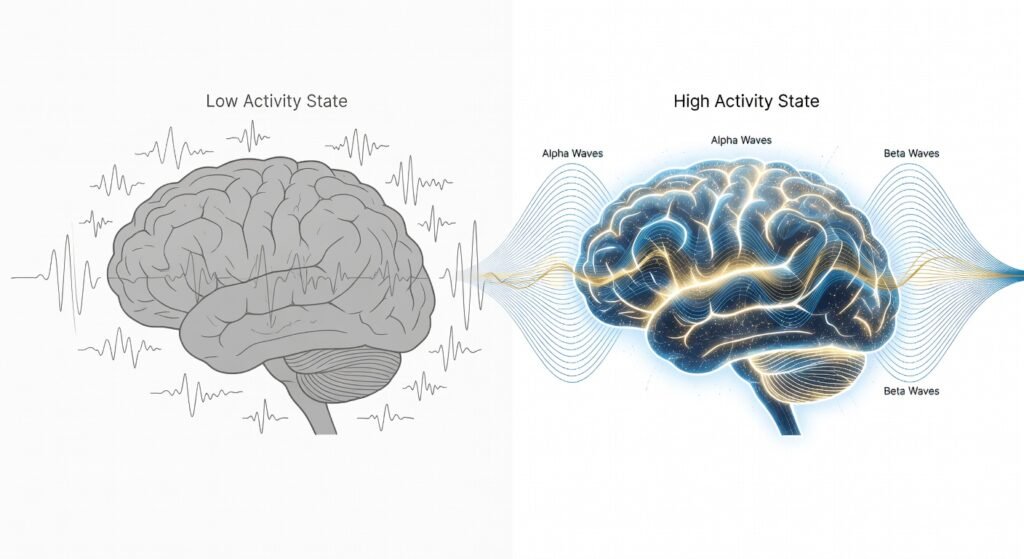
Binaural beats allow you to consciously shift into whichever brainwave state best serves your current task — a cognitive superpower that used to require years of meditation practice.
What Does the Research Say About Binaural Beats for Memory and Focus?
The peer-reviewed evidence is growing, and it’s compelling:
📚 Memory Enhancement
A 2019 study published in Psychological Research found that participants who listened to theta binaural beats demonstrated significantly improved working memory performance compared to control groups. Theta waves are strongly linked to hippocampal activity — the region of the brain most responsible for memory formation and recall.
🎯 Focus and Attention
Research from the Journal of Cognitive Enhancement (2020) showed that exposure to beta binaural beats improved sustained attention and processing speed in cognitive tasks. Participants reported feeling more mentally “locked in” and less distracted.
🧠 Learning and Retention
A study from the Applied Psychophysiology and Biofeedback journal found that students who studied with alpha-frequency binaural beats showed improved information retention and reduced test anxiety compared to those who studied in silence or with regular music.
💡 Creativity and Problem-Solving
Theta waves — particularly in the 4–7 Hz range — have long been associated with the hypnagogic state (the twilight between wakefulness and sleep) where many people report sudden insights and creative solutions. Binaural beats targeting theta frequencies can replicate this state deliberately.
Bottom Line: The research consistently supports the use of binaural beats as a non-invasive, drug-free cognitive enhancement tool — particularly for focus, learning, and memory.
How Students Benefit from Binaural Beats
For students, the cognitive demands are intense:
- Absorbing massive volumes of information across multiple subjects
- Retaining and recalling that information during exams under pressure
- Maintaining focus during long study sessions with constant digital distractions
- Managing anxiety that impairs memory consolidation and test performance
Binaural beats address all four of these challenges:
- Alpha frequencies create a calm, receptive mental state that makes reading comprehension and note-taking more effective
- Theta frequencies in binaural beats for memory support the deep memory encoding that happens during periods of relaxed concentration
- Beta frequencies sharpen active recall — the kind of focused retrieval you need during practice tests
- Gamma frequencies help you synthesize complex information and see relationships between concepts
Many students report that using binaural beats for memory feels less exhausting — because their brain is operating more efficiently, not harder.
How Entrepreneurs Benefit from Binaural Beats

Entrepreneurs face a different but equally demanding cognitive battlefield:
- High-stakes decision-making with incomplete information
- Creative problem-solving in rapidly changing environments
- Deep work sessions that require sustained, distraction-free focus
- Stress and burnout that erode executive function over time
Here’s how binaural beats map to those needs:
- Beta binaural beats sharpen executive function — ideal for strategic planning, writing, financial analysis
- Alpha binaural beats are perfect for brainstorming, pitching, and client work — alert but relaxed
- Theta binaural beats for memory unlock the creative insight state — where your best ideas live
- Delta binaural beats support recovery sleep — because an entrepreneur running on poor sleep is an entrepreneur running at 60% capacity
The most productive entrepreneurs aren’t working harder. They’re working in better mental states. Utilizing binaural beats for memory gives you control over those states.
How to Use Binaural Beats Effectively
Before we get into the best way to access these benefits, here are the essential best practices:
✅ Do’s:
- Always use stereo headphones or earbuds — binaural beats don’t work through speakers because each ear must receive a separate frequency
- Choose the right frequency for your task (Alpha for reading/learning, Beta for analytical work, Theta for creativity)
- Listen for at least 15–30 minutes to allow entrainment to occur
- Minimize visual distractions — pair binaural beats with a clean workspace or the Pomodoro technique
- Use consistently — like exercise, the benefits compound over time
❌ Don’ts:
- Don’t use binaural beats while driving or operating machinery
- Don’t expect instant results on your very first session — your brain needs time to adapt
- Don’t use delta frequencies when you need to stay alert
- Avoid low-quality recordings — audio quality matters significantly for effectiveness
The Problem with Most Binaural Beat Content Online
Here’s the honest truth: not all binaural beats are created equal.
A quick YouTube search will return hundreds of “binaural beats for focus” videos. The problem? Most of them are:
- Poorly engineered — wrong frequency differentials, inconsistent tones
- Generic — not designed with a specific cognitive outcome in mind
- Unpleasant to listen to — raw sine waves with no musical structure, making sustained listening uncomfortable
- Unverified — no scientific methodology behind their creation
For casual curiosity, free online content is fine. But if you’re a student preparing for critical exams or an entrepreneur managing high-stakes responsibilities, you need something built with precision and purpose.
That’s where purpose-designed audio programs change everything.
Introducing The Brain Song: A Purpose-Built Cognitive Audio Experience
After evaluating the landscape of binaural beat tools and programs available today, one solution stands out for students and entrepreneurs who are serious about cognitive performance: The Brain Song.
The Brain Song isn’t just another binaural beats playlist. It’s a scientifically structured audio program designed specifically to:
- Enhance memory encoding and recall through carefully calibrated theta and alpha frequency targeting
- Sharpen sustained focus using beta wave entrainment layered over pleasant, listenable soundscapes
- Reduce cognitive fatigue so you can maintain high performance across longer work and study sessions
- Support neurological optimization through consistent, daily use — helping your brain build stronger pathways for learning and retention
Why The Brain Song Works Differently
What separates The Brain Song from generic online content is the intentional design philosophy behind it:
- ✅ Precise frequency engineering — frequencies calibrated for specific cognitive outcomes, not just generic “focus” labels
- ✅ Musical integration — embedded within actual music rather than raw tones, making it significantly more sustainable for long listening sessions
- ✅ Progressive structure — designed to guide your brain through optimal states rather than holding a single frequency throughout
- ✅ Accessible for beginners — no prior meditation experience or technical knowledge required
For a student pulling long study sessions before finals, or an entrepreneur who needs to write a proposal, close a deal, or solve a complex operational problem — The Brain Song provides the cognitive environment your brain has been missing.
Real-World Application: How to Integrate The Brain Song Into Your Day
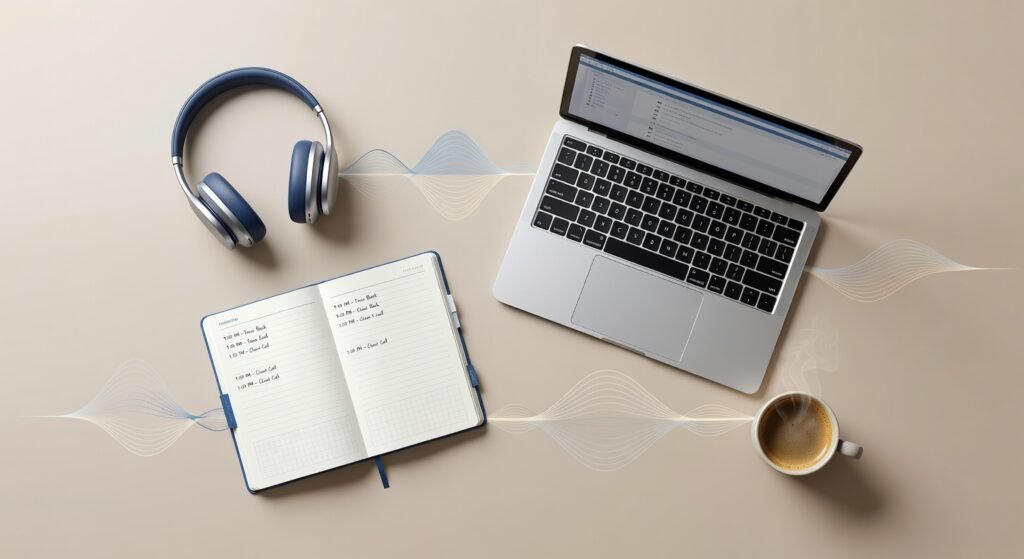
Here’s a practical daily routine built around binaural beats for memory and focus:
🌅 Morning (6:30–7:00 AM) — Activation
Start your day with beta-focused audio to prime your brain for analytical thinking. This is ideal before strategic planning, email triage, or lecture review.
📖 Study/Deep Work Block (9:00 AM–12:00 PM) — Alpha/Beta Mode
Use alpha-to-beta frequencies during your primary work block. Pair with the Pomodoro technique (25 minutes on, 5 minutes off). This is where The Brain Song shines for sustained focus.
🍽️ Post-Lunch (1:00–1:30 PM) — Theta Reset
The post-lunch dip is real. A short theta session during a rest period can facilitate memory consolidation from your morning session and reset your creative bandwidth for the afternoon.
🌆 Afternoon Deep Work (2:00–5:00 PM) — Beta Focus
Return to beta frequencies for analytical tasks, problem-solving, or content creation.
🌙 Evening Wind-Down (9:00–9:30 PM) — Theta/Delta Transition
End your day with slower frequencies to facilitate memory consolidation during sleep and prepare your nervous system for restorative rest.
Frequently Asked Questions About Binaural Beats for Memory and Focus
Are binaural beats safe?
Yes. Binaural beats are completely non-invasive and have been studied extensively without evidence of harm in healthy individuals. However, people with epilepsy or those who are pregnant should consult a physician before use.
How long before I notice results?
Many users report improved focus within their first session. More substantial improvements in memory and cognitive performance typically emerge after 2–4 weeks of consistent use.
Can I use binaural beats while studying or working?
Absolutely — in fact, that’s the ideal use case. Unlike podcasts or lyric-heavy music, binaural beat audio doesn’t compete with your verbal processing centers, making it ideal background audio for cognitive tasks.
Do I need expensive headphones?
No. Any standard stereo earbuds or headphones will work. The key is that each ear receives a separate audio channel — something regular stereo headphones provide.
Can binaural beats replace sleep?
No. Binaural beats are a complement to good sleep hygiene, not a replacement. Theta and delta frequencies can support sleep quality and memory consolidation, but they don’t substitute for actual sleep.
The Competitive Advantage You Haven’t Tapped Yet
In a world where every student is competing for limited spots in top programs, and every entrepreneur is competing for market share, attention, and talent — cognitive performance is the ultimate competitive advantage.
You can have the best strategy, the best study materials, the most ambition in the room. But if your brain isn’t operating at its peak — if your focus fractures, your memory fails, and mental fatigue cuts your productive hours in half — none of that matters.
Binaural beats for memory and focus aren’t a magic pill. They’re a tool — one backed by neuroscience, validated by research, and used by a growing number of high performers who’ve stopped leaving their cognitive potential to chance.
The only question is: are you ready to use every legitimate, science-backed advantage available to you?
Final Verdict: Should You Try Binaural Beats for Focus and Memory?
If you are:
- A student who needs to study smarter, retain more, and perform under pressure
- An entrepreneur who needs sustained focus, creative clarity, and sharp decision-making
- Someone who has tried caffeine, supplements, or productivity hacks and still feels like their brain isn’t running at full capacity
Then yes — binaural beats deserve a serious place in your cognitive toolkit.
And if you want to start with the most professionally engineered, cognitively targeted audio program available rather than sifting through unverified YouTube playlists, The Brain Song is the clear, evidence-aligned choice.
🎧 Ready to Unlock Your Brain’s Full Potential?

Your brain is capable of extraordinary things — sharper memory, laser focus, creative breakthroughs. It just needs the right environment to perform.
Click here to experience The Brain Song →
Stop fighting your own biology. Start working with your brain — the way it was designed to work.
Disclaimer: Individual results may vary. Binaural beats are intended to support cognitive performance and should not be used as a substitute for medical advice, treatment, or diagnosis. Always consult a qualified healthcare professional if you have concerns about neurological health.
Ultimately, making binaural beats for memory a part of your daily routine is highly recommended.
Welcome to The Nexus Feed, your ultimate source for productivity hacks. Today, we dive deep into how using binaural beats for memory can transform your mental focus.Welcome to The Nexus Feed, your ultimate source for productivity hacks.