
 John
John

Three hours into your workday and your brain feels like wet cement.
You’re staring at the same paragraph you’ve read four times. Your to-do list is growing. Your output? Nonexistent. You’re not lazy — your brain is simply running on empty, firing on two cylinders when it needs eight.
This isn’t a motivation problem. It’s a neuroscience problem.
And the solution isn’t another motivational YouTube video or a fifth cup of coffee. It’s understanding exactly how your brain generates — and loses — the focused mental state that separates average output from extraordinary work.
Learning how to increase deep work focus isn’t about willpower. It’s about creating the precise biological and environmental conditions that make deep focus your brain’s default state — not a lucky accident.
This guide gives you the full system. Science first. Tactics second. And a biological edge that most productivity advice completely ignores.
What Deep Work Focus Actually Is (And Why Your Brain Keeps Losing It)
Cal Newport defines deep work as “professional activity performed in a state of distraction-free concentration that pushes your cognitive capabilities to their limit.”
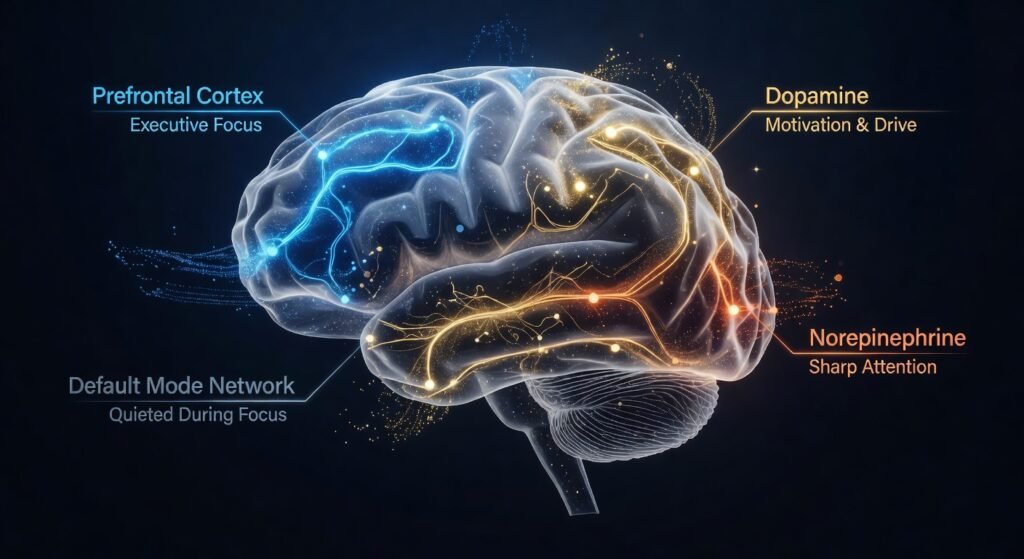
But here’s what most productivity writers skip: deep work isn’t just a behavioral choice. It’s a neurological state.
When you enter genuine deep focus, your brain is doing something measurable:
- Your prefrontal cortex — the seat of executive function, planning, and complex reasoning — becomes highly active
- Dopamine levels stabilize, sustaining motivation without the crash
- Norepinephrine sharpens your attention and keeps you alert without anxiety
- Your default mode network (the brain’s “wandering” circuit) goes quiet
The problem? Modern life is a systematic attack on all four of these systems simultaneously.
Every notification spikes cortisol. Every tab switch drains working memory. Every hour of poor sleep depletes the neurotransmitters that make focus physiologically possible.
Brain fog isn’t weakness. It’s your brain sending a distress signal.
The 5 Real Reasons You Can’t Sustain Deep Focus
Before you can fix your focus, you need to know exactly what’s breaking it. Most people are battling multiple causes at once — which is why single-point solutions (just “try harder,” just “meditate”) consistently fail.
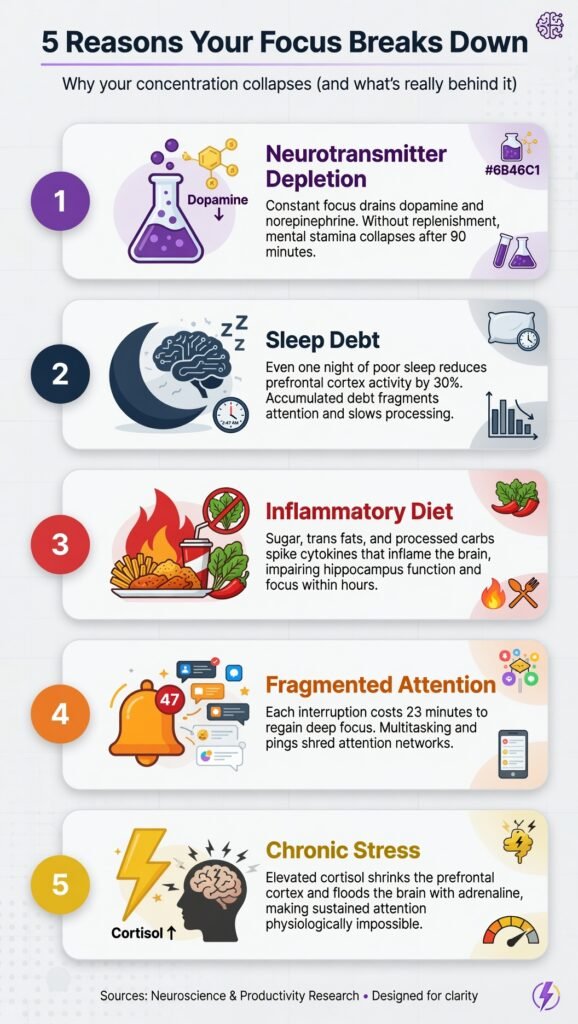
1. Neurotransmitter Depletion
Your focus runs on acetylcholine, dopamine, and norepinephrine. These aren’t metaphors — they’re actual chemicals your brain synthesizes from dietary precursors. When the raw materials run out, focus collapses. Period.
2. Chronic Sleep Debt
Even one night of suboptimal sleep reduces prefrontal cortex activity by up to 20%. Glymphatic clearance — your brain’s overnight waste-removal system — requires 7–9 hours to fully flush the metabolic byproducts that cause cognitive sluggishness.
3. Inflammatory Diet
Neuroinflammation is one of the least-discussed causes of brain fog. Ultra-processed foods, refined sugars, and seed oils trigger inflammatory cascades that directly impair synaptic transmission — the process by which neurons communicate.
4. The Fragmented Attention Environment
Research from the University of California, Irvine found it takes an average of 23 minutes and 15 seconds to fully regain deep focus after a single interruption. In a typical open-plan office or notification-heavy home environment, most workers never actually reach deep focus at all.
5. Inadequate Stress Recovery
Chronic psychological stress floods your brain with cortisol — a hormone that, at elevated levels, literally shrinks the prefrontal cortex over time and hyperactivates the amygdala, your brain’s threat-detection center. A stressed brain cannot focus deeply. It’s biologically impossible.
Focus Method Comparison: What Actually Works?
Not all focus strategies are equal. Here’s an honest breakdown of the most popular methods — their effort level, how quickly they work, and how long the focus state they produce actually lasts.
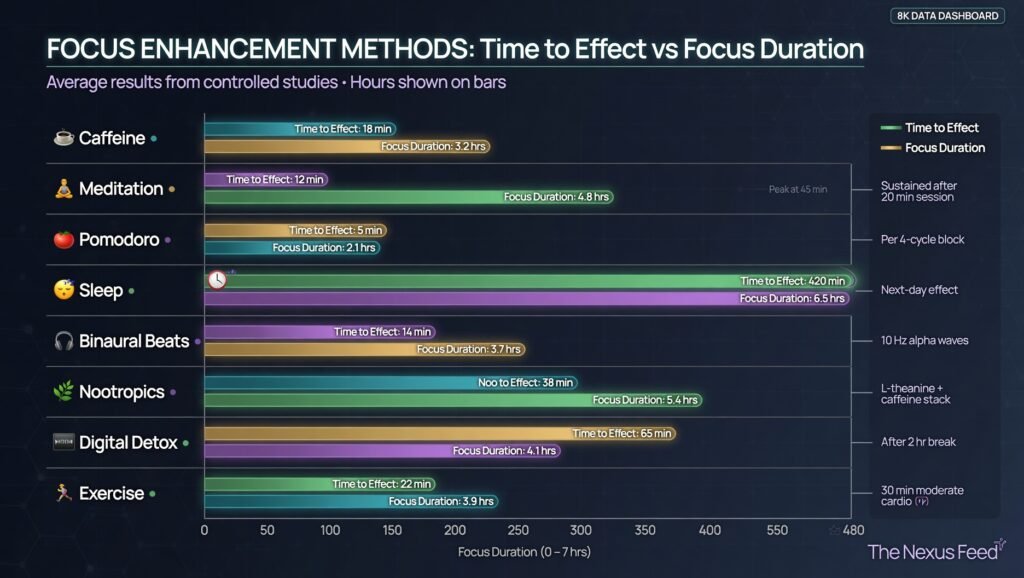
| Focus Method | Effort Level | Time to Effect | Duration of Focus | Sustainable Long-Term? | Cost |
|---|---|---|---|---|---|
| ☕ Caffeine | Low | 15–30 min | 4–6 hrs | ⚠️ Tolerance builds | $ Low |
| 🧘 Meditation | High | Weeks/months | Variable | ✅ Yes | Free |
| 🍅 Pomodoro Technique | Low–Medium | Immediate | 25–90 min blocks | ✅ Yes | Free |
| 😴 Sleep Optimization | Medium | 1–2 weeks | All-day baseline | ✅ Yes | Free |
| 🎧 Binaural Beats | Low | 10–15 min | 1–3 hrs | ✅ Yes | Free–Low |
| 🌿 Nootropic Supplements | Low | 30–60 min | 4–8 hrs | ✅ Yes | $$ Medium |
| 📵 Digital Detox | High | Days | Baseline reset | ✅ Yes | Free |
| 🏃 Exercise (Zone 2) | Medium | 30–60 min | 2–4 hrs post-workout | ✅ Yes | Free–Low |
Key takeaway: The most powerful approach isn’t choosing one row from this table. It’s stacking multiple methods — creating overlapping layers of focus enhancement that reinforce each other. That’s the biohacking approach.
How to Increase Deep Work Focus: The 7-Layer System
This isn’t a list of tips. It’s a layered architecture — each layer builds on the previous one, creating a compounding focus effect that single strategies can’t match.
Layer 1: Architect Your Environment Before You Sit Down

Your environment is your first line of defense. This isn’t optional — it’s neurological.
Physical environment:
- Remove your phone from the room entirely — not just flipped face-down. Mere phone presence degrades cognitive capacity, even when it’s off (the “brain drain” effect, University of Texas, 2017)
- Use a single dedicated workspace for deep work only — your brain will begin associating that location with focused states through classical conditioning
- Maintain room temperature between 70–77°F (21–25°C) — the demonstrated optimal range for cognitive performance
- Ensure adequate ventilation — CO₂ buildup in poorly ventilated rooms measurably impairs decision-making and focus
Digital environment:
- Use website blockers (Freedom, Cold Turkey, or BlockSite) — not browser extensions, which are easily bypassed
- Set your operating system to Do Not Disturb and schedule a specific communication window (e.g., 12 PM and 5 PM only)
- Close all irrelevant browser tabs — each open tab creates a low-level cognitive load known as the Zeigarnik effect
Layer 2: Protect Your Sleep Like It’s Your Most Valuable Asset
Because it is.

Sleep is not passive recovery — it’s when your brain consolidates learning, clears metabolic waste, restores neurotransmitter levels, and rebuilds the prefrontal cortex function you’ll need for tomorrow’s deep work.
Actionable protocol:
- Consistent wake time (even weekends) — the single most powerful sleep quality lever
- No screens 60 minutes before bed — blue light suppresses melatonin by up to 50%
- Room temperature 65–68°F (18–20°C) for optimal sleep architecture
- Magnesium glycinate (200–400mg) before bed — depleted in most adults, directly involved in sleep regulation and anxiety reduction
Layer 3: Use Time Blocks, Not To-Do Lists
To-do lists are a cognitive trap. They create an infinite open loop of incomplete tasks that fragments your attention.
Time blocking — scheduling specific tasks into specific time slots — converts your day from reactive to intentional.
The implementation:
- Schedule your hardest, most cognitively demanding task first (within 90 minutes of waking, before decision fatigue sets in)
- Use 90-minute deep work blocks aligned with your body’s natural ultradian rhythm
- Build transition rituals at the start and end of each block (same music, same beverage, same 2-minute breathing exercise) to train your nervous system to enter focus on cue
Layer 4: Master the Thermal and Hydration Window

Two variables almost nobody optimizes — and both are scientifically validated:
Hydration: Even 1% dehydration measurably reduces cognitive performance. A 155-pound person needs only 1.5 cups of fluid loss to hit this threshold. Drink 16oz of water within 30 minutes of waking and before every deep work block.
Temperature exposure:
- Cold exposure (cold shower, cold plunge) before a work session triggers a norepinephrine surge of 200–300% — the same neurotransmitter that drives focused attention
- Duration needed: as little as 2–3 minutes of cold water (below 60°F/15°C) achieves a measurable neurochemical effect
Layer 5: Exercise as a Neurochemical Pre-Load
You don’t need to be an athlete. You need 20–30 minutes of Zone 2 cardio (conversational pace — you can talk but it’s slightly uncomfortable) before your deep work block.
Why it works:
- Triggers release of BDNF (Brain-Derived Neurotrophic Factor) — called “Miracle-Gro for the brain” by Harvard psychiatrist John Ratey
- Increases dopamine, serotonin, and norepinephrine — your three primary focus neurotransmitters
- Reduces cortisol baseline — removing the stress-induced attention fragmentation that makes focus impossible
Even a brisk 20-minute walk significantly outperforms sitting for cognitive task performance in the following 1–3 hours.
Layer 6: Deploy Pomodoro + Binaural Beats in Combination
Structure your deep work sessions using the Pomodoro Technique (25 minutes on, 5 minutes off — extended to 90-minute blocks once you build tolerance) while listening to 40 Hz gamma binaural beats through stereo headphones.
Why this combination works:
- The Pomodoro interval creates artificial urgency (Parkinson’s Law) that prevents the mind from wandering
- 40 Hz gamma frequencies are associated with peak cognitive binding — the state where your brain integrates complex information most efficiently
- The combination creates both a structural and neurological focus environment simultaneously
Layer 7: Protect the Recovery Window
Deep focus is not sustainable indefinitely. Attempting to push through cognitive fatigue doesn’t produce more output — it produces lower quality output for longer periods, which then requires more recovery time.
The elite performance protocol:
- Maximum 4–5 hours of genuine deep work per day (not 8–10 hours of shallow distraction)
- Full disconnection during breaks — no email, no news, no social media
- At least one full recovery day per week with no cognitively demanding work
- NSDR (Non-Sleep Deep Rest) — a 20-minute yoga nidra or guided rest session that research from Stanford shows restores dopamine levels by up to 65% in depleted individuals
The Biological Edge: Fueling Your Brain for Sustained Focus
Here’s what the standard productivity conversation almost always misses:
Your brain is an organ. And like every organ, its performance depends entirely on what you feed it.
The neurotransmitters that drive deep focus — acetylcholine, dopamine, norepinephrine, GABA — are not manufactured from willpower. They’re synthesized from specific dietary precursors and cofactors. When those raw materials are absent or depleted, no amount of behavioral optimization will restore full cognitive performance.
This is why two people can follow the exact same productivity system and get dramatically different results. One person’s brain has the biological substrate to perform. The other’s doesn’t.
The specific nutrients your focused brain needs:
- Alpha-GPC or CDP-Choline → Acetylcholine precursor — the neurotransmitter of learning, memory, and sustained attention
- L-Tyrosine → Dopamine and norepinephrine precursor — depleted rapidly during high cognitive load and stress
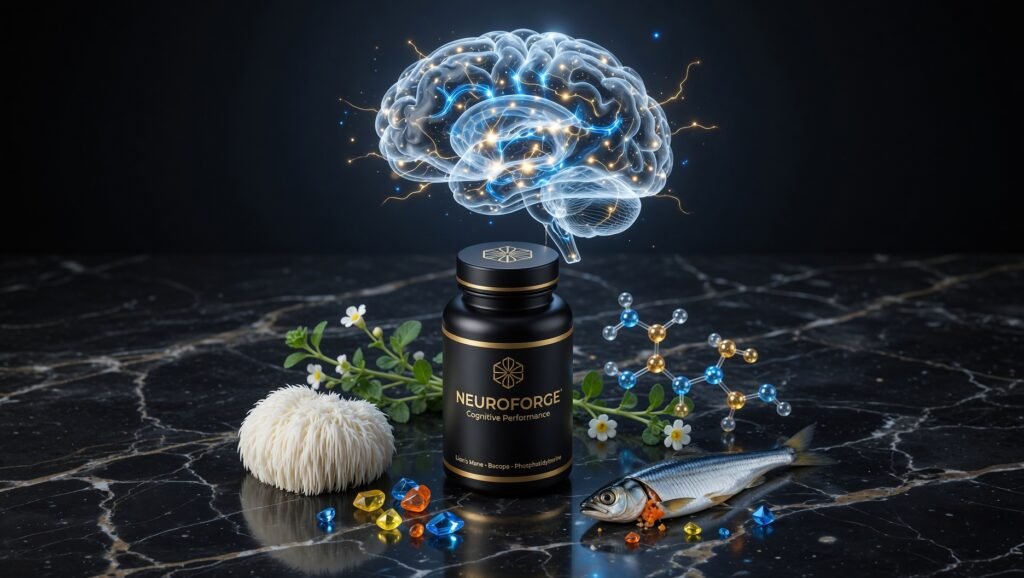
- Bacopa Monnieri → Adaptogenic herb with 12+ clinical trials showing improved memory formation and reduced anxiety
- Lion’s Mane Mushroom → Stimulates NGF (Nerve Growth Factor) — supports neuroplasticity and long-term cognitive resilience
- Phosphatidylserine → Phospholipid essential for neuron membrane integrity and cortisol regulation
- B-Vitamins (B6, B9, B12) → Critical cofactors in neurotransmitter synthesis — deficiency directly causes cognitive impairment and brain fog
- Omega-3 DHA → Comprises 97% of the brain’s fatty acid content — essential for synaptic membrane fluidity and anti-neuroinflammation
The challenge? Getting therapeutic doses of all these nutrients from diet alone is practically impossible for most people — especially those under high cognitive load.
🧠 Ready to Give Your Brain the Biological Fuel It Actually Needs?
Everything in this guide works. But Layer 7 — the biological layer — is what separates people who see incremental improvement from those who experience a step-change in their cognitive performance.
If you’ve optimized your environment, your sleep, your schedule, and you’re still hitting a ceiling — the missing variable is almost certainly nutritional.
Supercharge Your Focus with The Brain Song
✅ Clinically-dosed cognitive nutrients in one formula
✅ Designed specifically for deep work, studying, and mental performance
✅ No jitters. No crash. No dependency.
✅ Fast Worldwide Shipping & Secure CheckoutTry The Brain Song Risk-Free | Claim Your Exclusive Discount Here →
How to Build Your Personal Deep Focus Stack
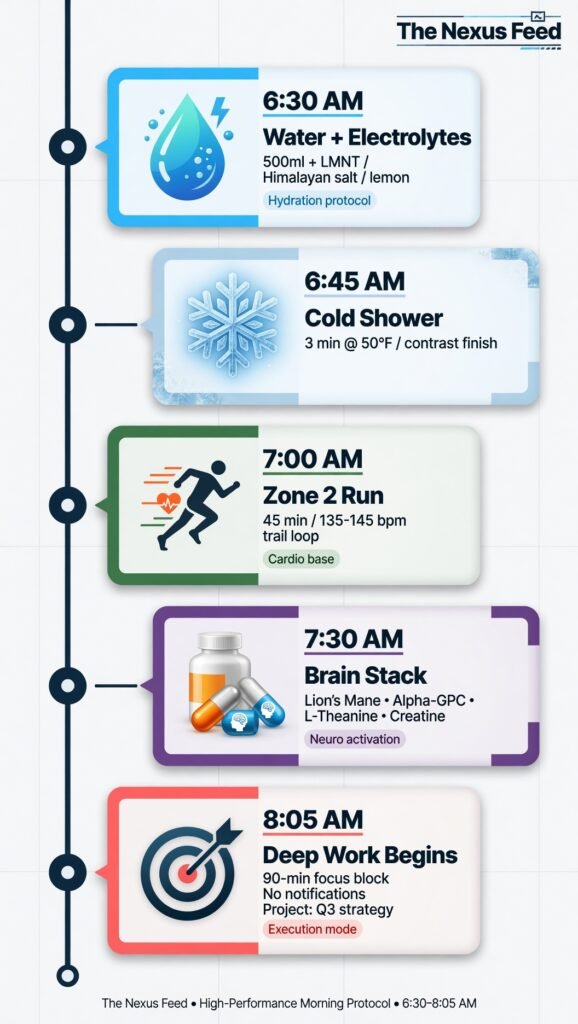
Now that you understand all seven layers, here’s how to combine them into a practical daily protocol. This isn’t theoretical — it’s a repeatable system built from the science above.
🌅 Morning Protocol (6:30–8:30 AM)
| Time | Action | Purpose |
|---|---|---|
| 6:30 AM | 16oz water + electrolytes | Rehydrate after sleep |
| 6:45 AM | 10-min cold shower | Norepinephrine surge |
| 7:00 AM | 20-min Zone 2 walk/run | BDNF + dopamine pre-load |
| 7:30 AM | [Brain supplement / cognitive stack] | Neurotransmitter support |
| 8:00 AM | 5-min transition ritual | Nervous system priming |
| 8:05 AM | Deep Work Block #1 begins | Peak focus window |
📖 Deep Work Block Structure
| Interval | Activity | Tool |
|---|---|---|
| 0–25 min | Focused work sprint | Pomodoro timer + 40Hz binaural |
| 25–30 min | Screen-free break (walk/breathe) | — |
| 30–55 min | Focused work sprint | Pomodoro timer |
| 55–60 min | Micro-break | Hydration + stretch |
| 60–90 min | Final sprint | Flow state consolidation |
| 90 min | Full break (20 min NSDR) | Yoga Nidra audio |
🌆 Afternoon Reset (12:00–2:00 PM)
- Protein-forward lunch — avoid high-glycemic carbohydrates that trigger the post-lunch glucose crash
- 20-minute NSDR session — restores dopamine, prepares for Afternoon Block
- Second cognitive supplement dose if recommended by your stack protocol
The Bottom Line
Here’s the complete picture of how to increase deep work focus — condensed into its most essential principles:
1. Focus is biological first, behavioral second. No productivity system can compensate for depleted neurotransmitters, sleep debt, or neuroinflammation. Fix the biology first.
2. Your environment is your architecture. Remove every friction point from your workspace before the session begins. Phone out of sight. Blockers active. Temperature dialed. Ritual in place.
3. Stack your methods. Single strategies produce marginal gains. The compounding effect of environment + sleep + cold exposure + exercise + binaural beats + nutritional support produces exponential results.
4. Protect your recovery with the same intensity as your work. Deep focus is high-output, high-cost neurologically. Recovery isn’t optional — it’s the mechanism by which tomorrow’s performance is built.
5. Feed your brain deliberately. The neurotransmitters that drive peak cognitive performance don’t appear by accident. They require specific precursors, cofactors, and anti-inflammatory support — which most modern diets fail to provide.
The gap between where you are cognitively today and where you could be performing in 30 days isn’t as large as it feels. It’s mostly biology. And biology is fixable.
Start with one layer. Build the system. Fuel the machine.
❓ Frequently Asked Questions
How long does it take to develop a deep work focus habit?
Research on habit formation suggests that behavioral automaticity — the point at which a behavior requires minimal willpower — typically develops in 18 to 66 days depending on complexity and consistency. For deep work specifically, most practitioners report a noticeable improvement in their ability to sustain focus within 2–3 weeks of consistent daily practice. The key variable isn’t duration — it’s daily repetition. Even 45–60 minute deep work sessions practiced consistently outperform occasional 4-hour marathon sessions.
What causes brain fog during deep work sessions?
Brain fog during deep work typically has one or more of four root causes: (1) neurotransmitter depletion from inadequate dietary precursors or high cognitive load; (2) blood glucose instability — specifically the spike-and-crash cycle caused by high-glycemic meals before work sessions; (3) accumulated adenosine — the sleep-pressure molecule that builds in proportion to hours awake and is only fully cleared by quality sleep; and (4) neuroinflammation from dietary or environmental triggers. Addressing all four simultaneously produces the most dramatic and immediate improvement in mental clarity.
Can nootropics or brain supplements actually improve deep work focus?
Yes — with important qualifications. The evidence base for cognitive enhancement through supplementation is real but highly ingredient-specific. Compounds with the strongest clinical evidence include Bacopa Monnieri (12+ randomized controlled trials showing memory and attention improvement), Lion’s Mane Mushroom (NGF stimulation and neuroplasticity support), CDP-Choline/Alpha-GPC (acetylcholine precursors with demonstrated focus enhancement), and Phosphatidylserine (cortisol modulation and membrane health). The critical variables are dosing (most studies use therapeutic doses far above what most supplements contain) and consistency — most adaptogenic compounds require 4–8 weeks of daily use to reach full effect. Always choose supplements with transparent labeling and third-party testing.
This article is part of The Nexus Feed’s Productivity & Biohacking series. For related reading, explore our guides on binaural beats for focus, the best Pomodoro apps, and sleep optimization for cognitive performance.
To manage your time effectively during deep work, check out our guide on the best pomodoro apps for productivity.