
 John
John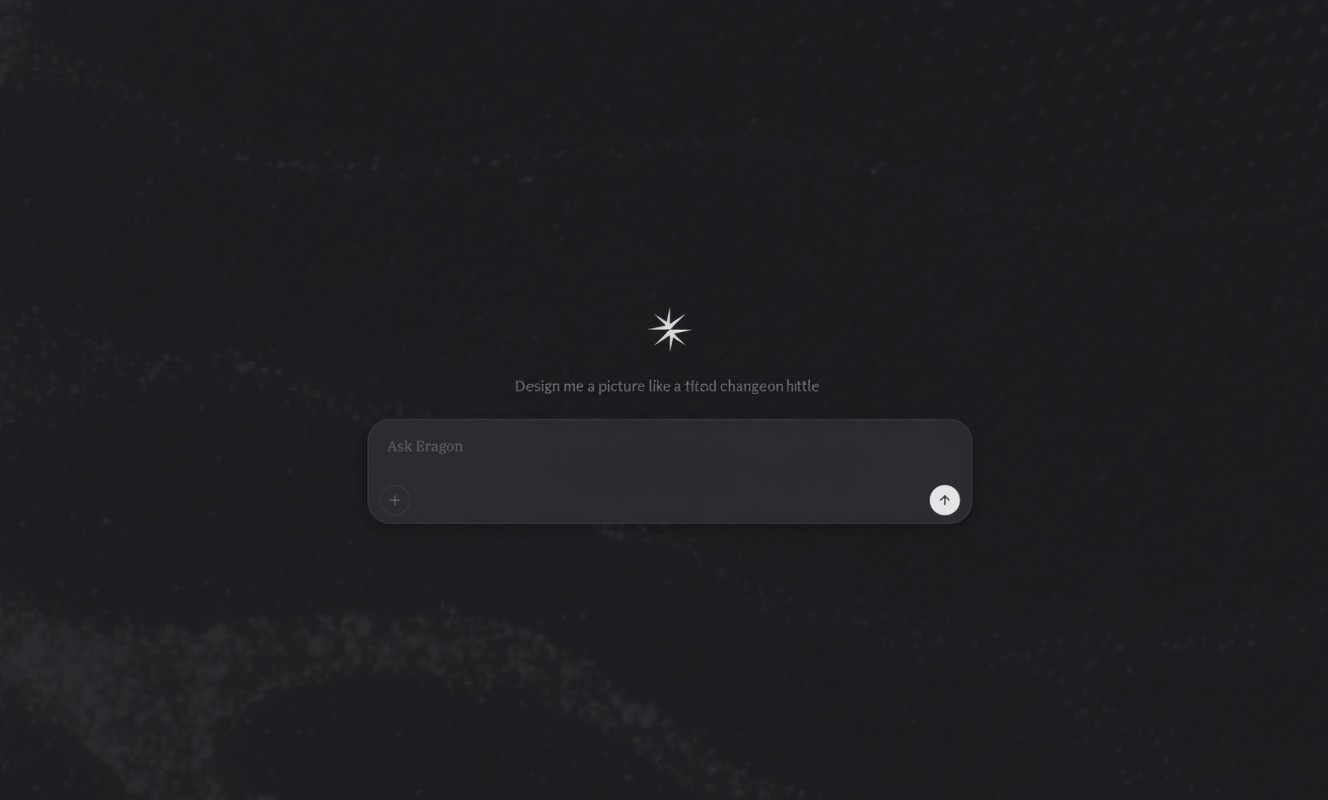
The advent of each new technological innovation inevitably reshapes the environments in which individuals and organizations operate. However, the manner in which artificial intelligence (AI) will redefine these landscapes remains uncertain.
One potential paradigm shift involves the complete obsolescence of traditional user interfaces. This vision is championed by Josh Sirota, the founder of Eragon, a startup launched in August that has recently secured $12 million in funding at a post-money valuation of $100 million.

The Death of Traditional Software Paradigms
Eragon’s mission is to develop an AI-driven operating system tailored for enterprise applications. Sirota’s foundational thesis is straightforward: traditional software paradigms are becoming redundant. With the decline of buttons, dialog boxes, and dropdown menus, the future of enterprise software lies in interactions executed via natural language prompts.
To this end, Eragon aspires to consolidate a comprehensive suite of business software—including tools analogous to Salesforce, Snowflake, Tableau, and Jira—through a Large Language Model (LLM) interface.
A Founder-Market Fit: From Oracle to Innovation
Having honed his expertise at Oracle and Salesforce, Sirota established Eragon alongside a specialized team. Among Eragon’s financial supporters are:
- Arielle Zuckerberg (Long Journey Ventures)
- Soma Capital
- Axiom Partners
“Eragon possesses significant potential to become the integrative framework facilitating modern decision-making across teams,” says Sandhya Venkatachalam from Axiom Partners.
Technical Pillars and Seamless Integration
The system is powered by technical giants: Rishabh Tiwari (UC Berkeley) and Vin Agarwal (MIT). Eragon integrates seamlessly with enterprise workflows by leveraging open-source models such as Qwen and Kimi.
The system undergoes specialized post-training on client-specific datasets while establishing linkages with organizational email accounts. For a recent adopter like Dedalus Labs, the software autonomously assigns user credentials and provisions cloud-based instances through simple natural language commands.
Security and Data Ownership: The Strategic Edge
AI’s security implications loom large, yet Eragon is already being tested in major firms. Nico Laqua, CEO of Corgi, praised Eragon as “the best applied AI for enterprise in the market,” highlighting a crucial selling point: Data Security.
Unlike frontier labs that require external APIs, Eragon trains models exclusively for its clients. Companies retain ownership of their model weights—the core configurations defining AI behavior—positioning these models as valuable, long-term corporate assets.
The Future: Agentic as a Service
Sirota likens Eragon’s approach to the move from centralized mainframes to personal computers. This vision was echoed by Nvidia CEO Jensen Huang, who argued that agent-driven AI tools will redefine white-collar workflows, likening the shift to how Windows enabled the era of personal computing.
Despite the statistic that 95% of corporate AI pilots fail, Sirota remains optimistic. He confidently predicts Eragon will grow into a billion-dollar enterprise by the year’s end, providing tools that directly solve the gaps between executive vision and day-to-day workflows.